

Biker fashion is usually explained with one rule: everything started as protective gear before it became a statement. That holds for the jackets, boots, gloves and helmets. It holds far less well for the patches and the jewelry, whose origins are murkier than the usual telling admits. The Perfecto and the purpose-built riding gear around it were designed to do a job. The wallet chain and the Mexican-style ring are a different case — their origins are not securely documented, however confidently the story gets retold. Here’s how the look actually came together, decade by decade, since the first riders climbed onto their steel horses in the early 1900s.
The Early Days of Biker Fashion
Today, motorcycling is open to everyone — men and women, every walk of life. That wasn’t always true. A little over a hundred years ago a motorcycle was a serious purchase — a Henderson Four was advertised at $325 in 1912 — though riders used them for work as well as pleasure.
Early motorcycles served pleasure, sport and plain transportation at the same time, and sidecars eventually turned them into family vehicles. Even in the saddle, though, their look still had to read as gentleman’s dress.
The standard biker look of that era was a tweed jacket cut in the latest rustic fashion, a flat cap to keep the wind out of your hair, and an overall neat, tidy appearance. Riders didn’t skip protection either — high boots kept their legs and feet safe from injury.

A couple of decades after its debut, motorcycles gained real speed, agility, and handling. Riders needed protective clothing to avoid scratches and bruises on top of that speed.
Gauntlet gloves joined the high boots for exactly that reason — they also kept hands warm at speed. Early riding clothing borrowed heavily from cavalry dress — gauntlet gloves and high boots above all.
Motordrome racing was already drawing crowds by the early 1910s, and racing and club clothing grew steadily more visible through the decades that followed. Motorcycle clubs started building uniforms for their racers instead of relying on casual or equestrian gear.
The classic piece — still visible in vintage fashion collections today — was the racing sweater: bright colors, a fitted silhouette, and a club or brand name knitted across the chest. The Harley-Davidson factory race team, nicknamed the “Wrecking Crew,” wore matching branded sweaters, and the AMA, formed in 1924, registered riders and sanctioned national events.

Leather Jacket
Still, biker outfits remained not practical enough — they gave little protection against rain, snow, or wind. Eventually, two-wheeler enthusiasts started borrowing from military uniforms, particularly the free-cut leather overcoats aviators wore. Leather blocked the cold wind, but riders felt cramped in the saddle inside the coats’ long, boxy cut.
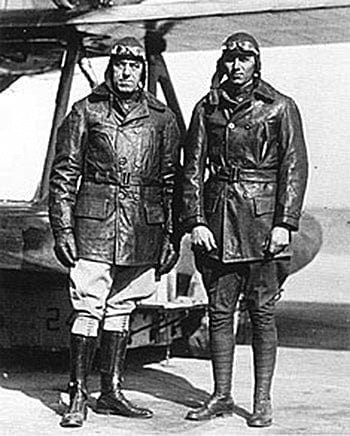
In 1928 Irving Schott introduced what the company describes as the first modern leather motorcycle jacket. In 1928, the Perfecto — named after Schott’s favorite cigar brand — went on sale through a Long Island Harley-Davidson dealer for $5.50.
The Perfecto became one of the most enduring biker-jacket designs, and its asymmetrical zipper, belt and zippered pockets are still copied nearly a century later.

By the early 1940s, Schott’s leather jackets were popular enough that the U.S. Army Air Corps placed a major wartime order — not for the civilian Perfecto, but for flight jackets built to the military’s own spec. Unpressurized cockpits meant pilots needed real wind protection at altitude.
The standard-issue A-2 flight jacket used a straight center-front zipper, knitted wool cuffs and waistband and a leather collar — a different silhouette from the civilian Perfecto’s slanted zipper and belted waist. Both answered the same problem — wind and exposure — but neither came out of the war: the civilian Perfecto appeared in 1928 and the military A-2 in 1931.
When the war ended, veterans came home with their combat leather jackets still in the closet — and with money to spend. Many bought Harley-Davidsons and cruised the country in that same leather, zipped up against the wind.
Returning veterans built a new generation of motorcycle clubs after the war. They were not the first — organized American clubs had existed since the early 1900s, the Alpha Motorcycle Club among them in 1902. Black leather spread through postwar clubs and came to stand for group identity, and for the outlaw image popular culture built on top of it.
Perfecto Jacket Alternatives
Motorcycling developed on both sides of the Atlantic, and it mattered particularly in Britain, where the wet encouraged weather-resistant riding clothing. Leather blocks wind and resists abrasion, but untreated leather is not reliably waterproof and turns heavy and cold once it is saturated.
In 1936 Duncan Barbour introduced a one-piece wax-cotton International suit for the International Six Day Trials. The civilian jacket followed in 1947, and the slanted map pocket was not added until 1951. The International became a fixture of motorcycle trials and stayed prominent in the sport for decades.
Belstaff’s Trialmaster took over in 1948, developed for the Scottish Six Days Trial. Steve McQueen owned one — his personal jacket sold at a 2006 Bonhams auction for around $32,000.
Whether Che Guevara ever actually wore a Belstaff is murkier: the connection rests on a single photo of a jacket that merely resembles a Trialmaster, and it wasn’t part of Belstaff’s own marketing until decades later.

Boots
The exact dates are clearer for boots than for jackets. Chippewa dates its first engineer boot to 1937, and Wesco began making them in 1939 — though Wesco’s own account says the “Boss” name came decades later.
The tall shaft came out of industrial safety footwear; Wesco’s own account links its version to defense-plant work and wartime ship welding. Either way, the design borrowed heavily from traditional English riding boots, and it fit motorcycle riders just as well.
Practical Jewelry: Wallet Chains and Cuffs
Bikers didn’t wait for jewelry to become fashion — they needed a few solid pieces to do a job first. Wallet chains do an obvious job — they tie a wallet to your clothing — and they became associated first with motorcycling and later with punk. When bikers actually picked them up is not well documented, whatever the usual 1950s story says. Losing a wallet a hundred miles back wasn’t an option anyone wanted to explain.

Punks took up chains and other repurposed hardware as conspicuous fashion through the 1970s. Riders today wear them either way. A sterling silver skull wallet chain still does the original job while adding some weight to the look.
Bracelets started just as practically. Wide leather cuffs became part of the look early on. The explanation you usually hear — that they fought grip fatigue or softened a crash — is not something we could establish. They ended up as decorative pieces in biker and rock dress, though a straight line from safety gear to bracelet has never been documented — a piece like the sterling silver skull cross cuff traces a direct line back to that original wrist guard.
The full biker bracelet collection covers the range from slim cuffs to heavier chain-link styles.
Vest
Returning WWII veterans started the trend. Postwar riders took up sleeveless denim and leather vests, mostly as somewhere to put club patches. The hot climate in the American South and Southwest — where many motorcycle clubs took root — made the switch an easy sell, and denim versions followed close behind.

On these sleeveless vests, or “cuts,” many clubs — outlaw clubs especially — carry “colors”: a set of back patches naming the club, its location, and its logo. Motorcycle clubs across America, and eventually the world, adopted the format, and vests covered in patches became as recognizable as the leather jacket itself.
Biker Style in Popular Culture
The Perfecto was still mostly unknown outside biker circles until 1953, when Marlon Brando wore one — a Schott Perfecto “One Star” — as gang leader Johnny in “The Wild One.” Costumers added a fictional skull-and-crossed-pistons patch for the film’s Black Rebels Motorcycle Club.
The design left a real mark: Chicago’s actual Outlaws MC adopted a near-identical crossed-pistons patch the following year. Brando’s look — jacket, jeans, engineering boots, and and a cap — became the template for “biker” in the public imagination. The cap was not the anachronism it is often called; period riders and clubs did wear them.


Two years later, James Dean became a biker-adjacent icon in a different way. He bought a 1955 Triumph TR5 Trophy before filming “Rebel Without a Cause” and rode it to the set — but that motorcycle never actually appears in the movie. It only shows up in off-set publicity photos, usually with Dean in a real leather jacket.
On screen, Jim Stark’s jacket is actually a red nylon windbreaker, not leather — a detail that gets lost over time because Dean’s off-screen motorcycle persona was so strong. Either way, the association stuck: leather jackets got banned in some American schools soon after, and Dean’s death not long after filming only deepened the outlaw mystique around the look.

Helmets and Protective Gears
Early crash helmets were mostly a racing item, and routine helmet use on the road stayed limited until mandates spread. That changed, slowly, after T.E. Lawrence — “Lawrence of Arabia” — died from a motorcycle crash in May 1935 near Bovington Camp, England.
His neurosurgeon, Hugh Cairns, studied the head injuries and pushed hard enough that the British Army made crash helmets compulsory for military riders by November 1941. The British Army made crash helmets compulsory for its motorcyclists in November 1941.
The full-face helmet came later and used a different material entirely: the Bell Star, introduced in the 1960s, built its shell from fiberglass with a foam liner — not cork. Helmets cut death and brain-injury risk sharply, but US law still varies by state — in states without a universal requirement, observed helmet use was 72% in 2023, so non-use is far from a fringe habit.
Rockers Rock Leather Jackets, too
Once the biker films put leather jackets in the spotlight, musicians borrowed straight from biker fashion — not for comfort, but for attitude. Fringed leather ran right through 1960s and early-1970s countercultural and Western-influenced dress.

Gene Vincent was performing in black leather by the end of the 1950s; Elvis Presley’s best-known all-leather stage look came later, with his 1968 television special. The look really caught fire from the mid-1970s onward.
By the mid-1970s, the Ramones had made the Schott Perfecto their uniform at CBGB. Punk took it further, adding studs, spikes, and chains to the jacket itself.
The trend outlived punk. Through the 1970s and ’80s, Kiss, the Sex Pistols, Debbie Harry, Metallica, Accept, and even Madonna and George Michael all wore leather outerwear on stage.
Biker Rings: From Knuckle Dusters to Mexican Coins
Rings round out the list, and like wallet chains and bracelets, they started out solving a problem. Heavy rings became part of the visual vocabulary of biker jewelry. The claim that they were adopted as fighting tools is repeated everywhere and evidenced nowhere.
Heavy, solid Mexican rings filled the gap. The heft fit the image — but legality varies by jurisdiction, and we are not going to tell you a ring is a legal substitute for a weapon.
The story you will read everywhere is that bikers picked them up in the late 1940s from Southern California border towns, where artisans melted worthless post-Revolution centavos into big ornate rings. The date, the five-dollar price and the route into American motorcycle culture are all undocumented.
We chased it and could not find a primary source for any of it — every trail leads back to jewelry retailers repeating each other, ourselves included. Revolutionary Mexico did have severe monetary instability, but that is not the same as proving centavos went worthless overnight or that anyone melted them into rings.
Modern versions run sterling silver and steel instead of melted coins, but the Mexican iconography stuck — Aztec and Mayan gods, horseshoes, eagles, and skulls all still show up. Our Mexican biker ring with a sugar skull and Guadalupe medallion carries that same two-tone tradition forward.
Browse the complete ring collection to see how far the look has traveled since those first Centavo coins.
Biker Fashion Timeline: The Short Version
Nine dates that map the whole story, start to finish:
| Year | Milestone | What Happened |
|---|---|---|
| 1913 | Tweed era | Riders keep gentlemanly and equestrian dress, with goggles, gauntlets and high boots alongside it. |
| 1928 | Schott Perfecto | Irving Schott adapts an aviator coat into the first motorcycle-specific leather jacket. |
| 1936 | Barbour International | Barbour introduces a one-piece wax-cotton International suit for the International Six Day Trials. |
| late 1940s | Mexican coin rings | Southern California bikers adopt rings said to be recast from devalued Centavo coins. |
| 1941 | Military helmets go mandatory | The British Army requires crash helmets for riders, prompted by Lawrence of Arabia’s fatal 1935 crash. |
| 1948 | Belstaff Trialmaster | Waxed-cotton jacket worn by Steve McQueen, among others. |
| 1953 | The Wild One | Marlon Brando’s Schott Perfecto becomes the visual shorthand for “biker.” |
| 1960s | Bell Star helmet | First full-face motorcycle helmet, built from fiberglass and foam, not cork. |
| mid-1970s | Ramones & punk | The leather jacket becomes rock-and-roll uniform — studs and spikes included. |
Most of this wardrobe began as gear that had a job to do. The rest of it — the patches, the rings, the chains — got its meaning later, from clubs, film, music and fashion, and that is a different kind of history.
The protective half of that story did not stop where the history does. Modern CE garment classes, EN 1621 armor levels and the ECE 22.06 helmet tests are covered in our current guide to protective biker clothing.