

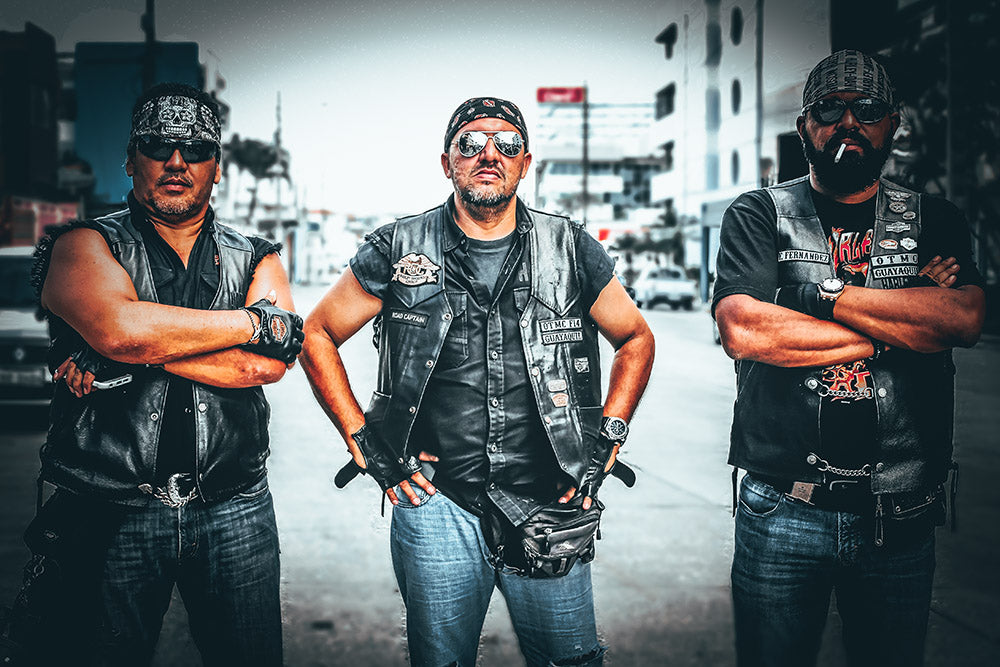
The roaring engines and tough, leather-clad bikers cruising the open road. This rebel image has been burned into pop culture's imagination ever since bikes first hit the streets. But today, you don't need to own a Harley to rock biker clothing. Many staples of motorcycle style have peeled out of biker culture and into mainstream menswear, womenswear, and streetstyle.
How did it manage to do that? To understand its lasting allure, we need to trace biker fashion's journey from its pragmatic origins, through cultural obsession, and finally to mass adoption. As biker style accelerates into the 21st century, its timeless coolness appeals to more than just grizzled motorcycle gangs.
Hitting the Highway: The Origins of Biker Gear
Biker fashion was born out of necessity. When motorcycles first debuted in the early 1900s, riders needed durable biker clothing to protect them from crashes and weather at high speeds. Leather jackets, motorcycle boots, leather caps, and protective gear shielded bikers' skin from abrasion and winds.
These utilitarian origins birthed the classic biker aesthetic. The Schott Perfecto jacket, born in 1928, moved from WWII flight crews to motorcycle clubs to fashion runways — a journey covered in detail in our biker outfit history guide. Thick leather boots followed a similar path from horse riding to motorcycle culture, picking up studs and buckles along the way.

By the mid-1940s, motorcycle clubs emerged, though they were still few and far between. The infamous Hollister riot, covered sensationally by the media, cast bikers as dangerous rogues. While painting an exaggerated picture, news spotlighted bikers' rebellious counterculture reputations and boosted the cool factor of their styles. Soon a cultural obsession with bikers would propel their fashions well beyond just motorcycle circles.
Acceleration into Pop Culture
It didn't take long for Hollywood to glorify the biker image. The 1953 film The Wild One was loosely based on the aforementioned Hollister incident. However, it offered an edgy take on the biker image. At the time, few people knew how real bikers actually looked and dressed. So, Hollywood took creative license, mixing what they thought bikers wore with added embellishments they deemed "cool."
Marlon Brando's leather jacket and jeans were rather authentic, which can't be said about the cap. It would simply blow right off at high speeds. Nevertheless, his brooding rebel biker catalyzed a romanticized cultural obsession. Mass audiences now saw bikers as daring rogues, cementing their leather jackets as a symbol of masculine rebellion.
Easy Rider further catapulted biker looks into the 1960s counterculture. Peter Fonda and Dennis Hopper wore dirty denim, leather jackets, and cowboy boots while cruising choppers down Route 66. Their biker-slash-hippie style became synonymous with freedom from oppressive mainstream America. More celebrities who shaped motorcycle fashion would follow in the decades ahead.
Soon after, we could see more and more movie characters flaunting biker clothes, regardless of whether they had a steel horse or not. The characters of John Travolta and Olivia Newton-John in Grease, Mel Gibson in Mad Max, Arnold Schwarzenegger in The Terminator, Gary Oldman and Chloe Webb in Sid and Nancy, Johnny Depp in Cry-Baby — the list of leather-clad silver screen heroes can go on and on.
The obsession with motorcycles and ride-ready clothes bled into music as well. The pioneer of biker-style popularization was the king of rock'n'roll himself. As an avid motorcyclist, Elvis made sure that his passion shone through in his creative endeavors. In the iconic Jailhouse Rock, a black jacket is an indispensable part of his look. His stage persona and music performances embodied a youthful boldness and edge.
By the 1970s, biker clothing was being widely adopted by rock bands as the defining anti-establishment fashion. British groups like The Who, The Rolling Stones, Led Zeppelin, and many others brought motorcycle jackets, boots, and vests into their daring looks. Jimi Hendrix put his own flamboyant spin on the biker jacket, often wearing vivid purple or red leather with artful fringe and scarves for a psychedelic twist. Heavy metal bands like Judas Priest and Motörhead decked themselves out in studded, patched leather vests and jackets that paid homage to motorcycle clubs. By blending biker gear with their own aesthetic, these music acts projected rugged rebellion and unrestrained freedom.
Biker Gear Goes Mainstream
After decades of cementing its cultural clout through Hollywood and rock n' roll, biker fashion was primed to roar from subculture to mainstream fashion. Key staples like leather jackets and boots crossed over beyond just motorcycle circles, retaining their attitude while softening their rough edges.
The evolution began in the 1980s and 90s as pop stars like Michael Jackson made the leather jacket seem effortlessly cool. Basic moto jackets cropped short became a wardrobe staple, making leather for the masses. Non-biker brands like Wilson's Leather put their own commercial spin on biker jackets while tapping into their edgy essence.
Leather biker caps also evolved from functional to fashionable, reimagined as hip baseball hats and beanies for rappers, skaters, and urban youth. Everyday denim shifted towards higher durability to mimic motorcycle jeans, with brands like Levi's promoting their resilience.
By the 2000s, biker touches like studs, buckles, and chunky zippers moved from utility to stylish embellishments. Harness boots kept their bold silhouette but with mainstream variety like low heels and different colors. Even skull motifs moved from biker vests to fashion runways, showing up on luxury accessories and high-street clothing alike.
High fashion took biker gear even further into prestige. Designers like Yves Saint Laurent artfully crafted couture leather jackets with Perfecto sensibilities. Ralph Lauren, Calvin Klein, and Donna Karan all incorporated slim moto jackets into collections, cementing them as refined wardrobe essentials. Leather biker hats and tall boots graced prestigious runways as well.

Once relegated to dive bars and garages, biker fashion gained luxury status while opening the doors for everyday biker-inspired style to customize any look with an injection of attitude.
Biker Style in Subcultures
While biker fashion became more mainstream, its renegade spirit remained fully alive in the punk, goth, metal, and rock subcultures emerging in the 1970s-1990s. These scenes took the rugged essence of moto gear but customized it into something entirely their own.
For punks, the biker jacket in black leather became ubiquitous, slapped with anarchic patches, pins, and spray-painted slogans. Oversized, asymmetrically zippered jackets projected punk's abrasive energy. They studded the shoulders or back panels for an extra punch of aggression.
Goth kids went for a more dramatic, theatrical edge, donning long Matrix-style leather trench coats with a sweeping dark elegance. Others went for a medieval rock vibe with distressed leather tunics layered over billowy pirate shirts. If you want to explore that aesthetic further, our guide to goth biker style breaks it down.
Headbangers in the heavy metal scene favored the sleeveless biker vest or denim jacket adorned with patches representing their favorite bands. The vest's metal studs and distressed cut-off sleeves allowed free movement for shredding the guitar and working a crowd.
Across these scenes, biker caps and chunky biker boots also remained essential for that outsider edge. While mainstream fashion softened moto gear, these subcultures kept its grimy spirit alive. Wallet chains traveled a similar path through punk, hip hop, and grunge — always carrying that countercultural charge.
Biker style granted these groups, often shunned from society, an empowering sense of identity and belonging. A leather jacket with anarchist patches said "I am punk" as clearly as a vest decorated in metal band logos screamed "I am a headbanger." The gear gave misfits a uniform and channel for self-expression.
By the 90s, biker fashion was no longer confined to just bikes and countercultures but its influence continued pulsing through music scenes, from punk to nu-metal. The moshing masses still needed leather to help them rage against the mainstream machine.
Women Claim the Biker Look
Biker style has never just been for the boys, despite motorcycle clubs barring women from official membership for decades. Women have long straddled motorcycles in their own functional biker outfits as a symbol of empowerment. And they dared to create all-female bike groups to prove that motorcycles weren't just for men.
The daring female motorcyclists of the 1920s-30s flaunted bulky leather jackets, boots, denim, and flannel on par with their male counterparts. After all, safety comes first. But by the 1960s-70s, women bikers viewed fashion as a symbol of liberation and a statement of defiance. Bold leather jackets, skin-tight pants, and thigh-high boots let them feel powerful on their own terms.

Today's women have fully claimed the style's coolness for themselves. The tough moto jacket remains essential, tailored to flatter curves while projecting a bold attitude. Many pair leather with flowing dresses or miniskirts, juxtaposing sensual femininity with grit.
Slim leather pants also epitomize the modern biker aesthetic. Brands like BLK DNM and Rag & Bone offer slick leather leggings contoured for women. With strappy heels or chunky boots, they're equal parts daring and dominating.
Edgy biker jewelry featuring motorcycle motifs helps take the air of rebellion even further. Yet, it still puts an emphasis on femininity and charm. Women pair their sharp spikes, skull rings, and chains with tousled tresses and floral accents.
By fully embracing moto fashion, women display brazen confidence and strength. Their style captures the cultural obsession with the irresistible rebel — but on their own terms. The biker look is feminine yet fierce, tough yet tender.
Modern Ways to Wear Biker Clothing
Today biker gear meshes naturally with contemporary wardrobes to offer an instant injection of attitude. Leather jackets, boots, and studs transcend their functional roots as designers reinvent them for urban style. For a deeper look at assembling the full outfit, check our guide to building a biker inspired look.
For men, a moto jacket paired with chinos or dark-washed denim makes biker edginess office-appropriate. Leave the collar popped for extra insouciance. Strap on studded boots rather than sneakers to make casual Friday looks rock-ready.
For women, balance an oversized moto jacket with a flirty dress or mini skirt. The contrast between bare legs and tough leather is allure exemplified. Give the preppy aesthetic more personality by cuffing skinny jeans with strappy biker boots.

Subtle touches like silver skull jewelry, wallet chains dangling from belt loops, or a printed bandana worn as a necktie bring biker style to any ensemble. Both men and women can slip on an intricate biker necklace to let their inner rebel subtly shine.
The biker style also blends well with similarly edgy aesthetics. You can mesh it with punk through tartan, metal studs, and namesake tees. Or channel '80s glam with glossy leather pants, band tees, and lush hair metal locks. Want skater chic? Board shorts, Vans, and a sleeveless denim biker vest will come in handy.
The classics will never die, so biker pieces like fitted leather pants, motorcycle boots, and patch-covered denim jackets are destined to remain ever-relevant. If you view biker fashion as inspiration rather than costume, your creative possibilities are endless. With pieces meticulously introduced in your look, you can capture an attitude more than a specific era or tribe. Find what elements speak most to your inner lone wolf and make the best of them.
From Leather Jackets to a Lasting Legacy
Over a century, biker clothing has evolved from a practical necessity to a cultural icon. Born on the open road, leather jackets, vests, boots, caps, and bandanas have fueled rebellious movements from silver-screen heartthrobs to punk rockers raging against the mainstream.
Today, the moto jacket continues to cruise down high fashion runways, available in iterations ranging from grimy to glamorous, niche to ubiquitous. Yet no matter how many twists and turns biker fashion takes, it will always retain echoes of its functional roots and the irresistible allure of the free spirit. As long as there are rebellious hearts yearning for the wind in their hair, biker gear will never fully let go of its grip on our cultural imagination.
At Bikerringshop, we carry a full range of biker rings, bracelets, and handcrafted leather wallets — the kind of accessories that let you bring that road-tested attitude into everyday style.
Frequently Asked Questions
How did biker clothing become mainstream fashion?
Biker clothing entered the mainstream through a combination of Hollywood films, rock music, and high fashion. Movies like The Wild One (1953) and Easy Rider (1969) romanticized the leather-clad rebel image. Rock musicians from Elvis to Judas Priest adopted the look on stage. By the 1980s-90s, luxury designers like Yves Saint Laurent and Ralph Lauren incorporated moto jackets into their runway collections, cementing biker gear as a fashion staple.
What are the essential pieces of biker clothing?
The core biker wardrobe includes a leather motorcycle jacket (the Schott Perfecto is the original), heavy-duty boots with buckle or harness details, denim or leather pants, a leather or denim vest for patches, and accessories like silver rings, wallet chains, and bandanas. Each piece started as functional riding gear before crossing over into everyday fashion.
Can you wear biker style without riding a motorcycle?
Yes — biker fashion separated from motorcycle culture decades ago. A moto jacket, skull ring, or wallet chain with jeans are mainstream style choices now. Our biker inspired look guide breaks down exactly how to build the look as a non-rider.
Which subcultures adopted biker clothing first?
Punk was the first subculture to heavily borrow from biker fashion in the mid-1970s, adding patches, pins, and DIY customization to leather jackets. Goth followed with darker, more theatrical leather pieces. Heavy metal bands adopted studded vests and boots as stage uniforms. Each scene remixed the original biker aesthetic while keeping its core rebellious identity intact.