

Gothic style is all over modern mass culture — runways, red carpet events, movies, TV shows, and music videos. Yet most people still hold a vague notion of it: a mishmash of associations with medieval cathedrals of Western Europe, savage and warlike northern tribes, and odd youth with black lips and metal-emblazoned outfits.
Key Takeaway
Gothic fashion is a dark, romantic clothing style built on black and deep jewel tones, materials like velvet, lace, and leather, and heavy silver-toned jewelry. It grew out of the late-1970s UK post-punk scene and today spans at least 15 substyles — from antique and Victorian goth to cyber, corporate, and gothic lolita.
Meanwhile, the Gothic influence in modern fashion keeps growing — absorbing current trends and, at the same time, affecting them.
History of Modern Gothic
Although the Gothic style first appeared in the Middle Ages, the main features of its modern reincarnation were established in the 1970s. At that time, punk music with its rebellious philosophy and the “live fast — die young” slogan gained tremendous popularity. The rise was followed by a sharp decline, and decisive actions gave way to decadent moods. Riot was replaced with depressive decadence.
Initially, the new — or neo — Goths were not much different from the punks of the 1970s and 1980s. They also rocked black clothes embellished with myriads of metal accessories and leather inserts. Gradually, though, the Gothic style acquired its own features. A pivotal role in the development of the neo-Gothic subculture was played by the legendary band Joy Division.
Modern Goths are young romantics somewhat detached from everyday life. They are more interested in the afterlife, vampires, and cemeteries, and they process the world through melancholy and drama — which is also why fetish elements turn up in some gothic wardrobes.
Gothic aesthetics reached designer runways in the mid-1990s, largely thanks to Alexander McQueen. His early collections — The Birds (1995), The Hunger (1996, named after the 1983 vampire film), and later The Overlook (1999, inspired by Kubrick’s The Shining) — were bristling with black lace, corsetry, sharp tailoring, and Victorian drama. Dante (1996), staged inside a London church, remains one of the most openly gothic shows ever put on a runway.

Myths and Truth About Gothic Fashion
One of the main misconceptions is that gothic clothing must be black. Black certainly prevails, but it is wrong to believe it is the only shade Gothic accepts. There are outfits in pure white that read unmistakably gothic, while a complex black dress can remain just a black dress. So which features actually make fashion Gothic? Let’s figure it out.
Gothic style appeals to the past or future
Long vintage gowns, hats with feathers, and corsets are among the main attributes of the antique Gothic style. It is a no-brainer that they draw inspiration from fashion trends of the past. On the other hand, protective masks and goggles and massive chunky-soled shoes worn by cyber Goths are an appeal to the post-apocalyptic future of our world.
Gothic style does not tolerate warm colors
Gothic fashion is cool and aristocratic. Positioning themselves as “children of the night,” Goths do not wear pastel or ablaze colors save for rare exceptions. They do not sunbathe, to remain pale, and prefer accessories made of white metals such as silver, white gold, or, most often, low-cost alloys. Traditionally, white symbolizes the cold, deadly light of the Moon. It perfectly emphasizes mourning Gothic attire and the pallor of Gothic faces.
You will rarely see precious stones in Gothic accessories. Most fine jewelry set with jewels is made of gold, and that metal is unacceptable for Goths. Color-wise, most warm gemstones clash with gothic attire anyway — the main exceptions are diamonds and sapphires.

This said, semiprecious stones are a popular choice for gothic pieces. Cold-colored topaz, black opal, agate, jade, and other black-and-white gems are welcome, along with pearls — both natural and artificial. We broke down the motifs, metals, and stones in detail in our guide to gothic jewelry symbols and silver.
The most popular color choice of Gothic fashion is every shade of black. Black symbolizes mourning for a life imbued with pain and suffering. Gothic clothing is normally made of velvet, satin, and other materials that emphasize dark hues and make them look deep, noble, and dramatic. Gothic attire is frequently adorned with lace and light transparent fabrics, as well as leather — especially in accessories.
Gothic style is romantic and promotes individualism
For its followers, Gothic is more than a set of clichés about spikes, rivets, skulls, and vampire symbolism. For them, Gothic is foremost a way of self-expression. Hence any Goth has a huge number of homemade, handmade, and bespoke-crafted items in their wardrobe. Gothic clothes act as a visual label through which people with a certain emotional mood can tell the other members of their community who they are. Through this peculiar, out-of-the-ordinary style, Goths simultaneously assert themselves and “cure” their own sense of alienation.

Gothic style is tough and revolutionary
According to Valerie Steele — the American fashion historian who curated Gothic: Dark Glamour at The Museum at FIT in 2008, the first major museum exhibition devoted to gothic influences in fashion — the word “Gothic” has historically been tied to images of death, destruction, and decay. It started out as an insult, implying something dark, barbaric, gloomy, and creepy. Ironically, those negative connotations made it an ideally suited symbol of rebellion — a perfect fit for this gloomy and rebellious subculture.
Gothic style is artistic
Gothic fashion attracts artistic, free-spirited, and open-minded individuals. The gothic community largely consists of creative people — artists, dancers, musicians, designers, and actors. This explains a certain pomp of Gothic fashion, its courtly mannerism, excessiveness, and theatricality, as well as a scornful attitude toward naturalness and simplicity. Gothic clothing is complex in cut, replete with details and embellishment. Gothic hairstyles are works of art in their own right, be it a fountain worthy of the Louis XIV era, a combed lilac mohawk, or a bush of green cyber-goth dreadlocks.
Gothic style appeals to mourning
The Gothic community is curious about death — or rather, the philosophical and socio-cultural aspects of it. Hence the constant appeal of Gothic fashion to mourning motifs and black colors. Gothic style is the panache and decadence of Dracula: just as Dracula is considered both a dandy and a dark prince of elegance, a Goth carries the image of a dandy and a vampire aristocrat at once. The vampire brings a seductive, dramatic edge into gothic fashion — a quality Steele sums up as the “erotic macabre.”
Features of Gothic Fashion
The Middle Ages left an imprint on the appearance of these gloomy, melancholic fatalists. For the most part, they adopted only a narrow, laced waist; otherwise, the fashionable trends of that era have little in common with the appearance of modern Goths.
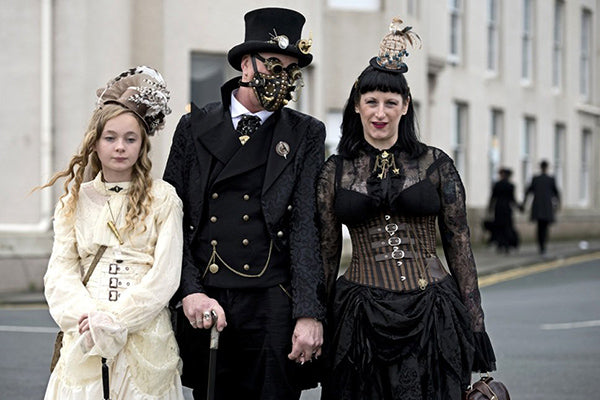
These grotesque personalities rather accept the role of Inquisition victims. They came into our world with a reminder of eternal grief, mourning, and the frailty of being. But believe me — they are not going to die today. For them, the exquisite beauty of death is a way to present themselves to the world and be noticed.
So, how do you recognize a Goth in a crowd? Gothic fashion has these features:
- the predominance of black with contrasting accents — for example, white or red inserts, inlays, or elements of clothing;
- other than black, Goths rock outfits in deep dark colors — purple, burgundy, green, and blue;
- clear silhouettes with straight or flowing lines prevail in clothes;
- the clothes are eccentric, often with a deliberately provocative edge;
- Gothesses wear vintage or, on the contrary, ultra-modern dresses with a complex cut;
- they rock voluminous skirts, both mini and maxi;
- their clothes include jabot, lace, and mesh elements;
- they flaunt corsets and harness belts, mostly worn on top of outfits;
- the main materials for Gothic clothing are silk, velvet, denim, leather, and lace. Organza, brocade, and taffeta are also widely used — their sheen serves as a spectacular embellishment for Gothic costumes. Another essential element is mesh, which shows up in stockings, sleeves, and shirts;
- besides traditional heavy unisex boots, Goth girls flaunt boots with lace, massive platforms, or high heels (Grinders, Dr. Martens, and the like). You will often see Goths in army boots or shoes with wide, fairly high heels; for solemn occasions, Gothesses prefer sky-high stilettos. A stout platform, an abundance of metal and leather inserts, and, of course, dark colors are the hallmarks of Gothic shoes;
- Goths are very fond of accessories, such as eccentric hats with veils and long gloves. Instead of handbags, they carry large black backpacks or elegant mini valises. Original Gothic accessories include latex, leather, or metal chokers, plus a lace or velvet umbrella to protect pale skin from the burning sun;
- Goths adore massive white-metal jewelry (silver, white gold, or platinum); yellow metals are absolutely unacceptable. Gothic jewelry means rings, bracelets, pendants, and earrings emblazoned with Celtic crosses, dragons, bats, black cats, roses, and skulls;
- Goths pull off expressive contrasts of dark hair and a pale face. The classic Gothic hairstyle is straight black hair, and a slightly disheveled look is considered elegant — common for boys and girls alike, who rarely emphasize gender;
- romantic Goths, on the contrary, gravitate toward curls and lush hairstyles, and many dye their hair vibrant red or ashy shades;
- Gothic makeup is a thick layer of pale powder, black eyeliner, intense eye shadows, and a dark or blood-red matte lipstick. Nails are covered in red nail polish as well.
Types of Gothic Fashion
Goths are divided into many subtypes — at least 15 recognized substyles, from antique and Victorian to cyber, corporate, and vampire Goths. Most are united by an accented aristocratic style, a craving for art, and generally melancholy moods, although some deviate from the canonical Gothic images. (For the subculture-first view — trad goth, mall goth, whimsigoth — see our breakdown of goth types.)
Traditional Goths. Imagine a black-haired girl or guy dressed in unisex outfits, flaunting a mesh top, leather pants or a tight skirt, torn black tights, and shoes with a huge platform. Pale skin, piercings, eye-catching makeup, plus statement silver like a chained two-finger ring — this is the common portrait of a traditional Goth.
Antique Goth. This style includes outfits stylized to resemble fashion trends of the 18th and 19th centuries. The main features of antique Goths are lace, elbow-length gloves, floor-length dresses, corsets, and veils. Men rock top hats and tailcoats. This style reflects elements of romanticism and neo-gothic.

Victorian Gothic style is one of the varieties of antique Gothic. Such outfits suit Gothic balls, Victorian picnics, or photo shoots rather than everyday wear. Nevertheless, the Victorian style and its individual elements occupy one of the most important places in Gothic fashion.
Gypsy Goths are exciting and beautiful in their own way. This style of clothing is characterized by wide maxi skirts and flamenco dresses with a complex structure. Gothic girls flaunt blouses with wide sleeves and leather corsets. Common fabrics are velvet and lace. Preferred colors are dark blue, scarlet, burgundy, purple, dark green, and black. All the clothes are rather baggy.
One of the most famous and recognizable is the Vampire style. These Goths emulate popular movie “vampires” such as Lestat de Lioncourt and Dracula. Vampire Gothesses tend to emphasize their sexuality and give their images a touch of drama. They achieve this with immaculately white skin and vibrant red shades in lipstick, manicure, and accessories. Men dress in camisoles, white shirts with ruffles, raincoats, and leather pants. The emphasis is placed on a juxtaposition of black and rich red colors symbolizing blood.

Cyber Gothic is a peculiar and quirky Gothic trend. This style harmoniously combines traditional Gothic and industrial elements. The clothes are dominated by artificial fabrics, most often in bright acidic or fluorescent colors, over-knee boots with extremely high platforms, and elements of cyberpunk culture. The most popular hairstyles are dreadlocks and mohawks. Girls prefer vinyl miniskirts, vibrant pantyhose and stockings, as well as tops revealing the back and belly. Both men and women rock tight leggings made of vinyl, leather, or latex, T-shirts with thematic prints, mesh waistcoats with zippers, and one-piece latex or PU suits.

Steampunk Gothic. Some argue that steampunk does not belong to Gothic at all, but plenty of Goths wear these outfits, and gothic designers keep borrowing from the style. Unlike most substyles, steampunk did not grow out of its wearers’ taste in music — it grew out of their taste in literature. Nevertheless, the Goths accepted steampunk warmly and enthusiastically, and today the crossover is everywhere.

The fetish Gothic style has also found its way into Goths’ wardrobes. Most often, the clothes are made from artificial materials such as latex, vinyl, and faux leather; genuine leather appears less often. All outfits are tightly fitting. Gothesses flaunt jumpsuits, mini dresses, corsets, crop tops, and tight pants. The style is characterized by an abundance of accessories with fetish aesthetics — collars, harnesses, handcuffs, and chains.

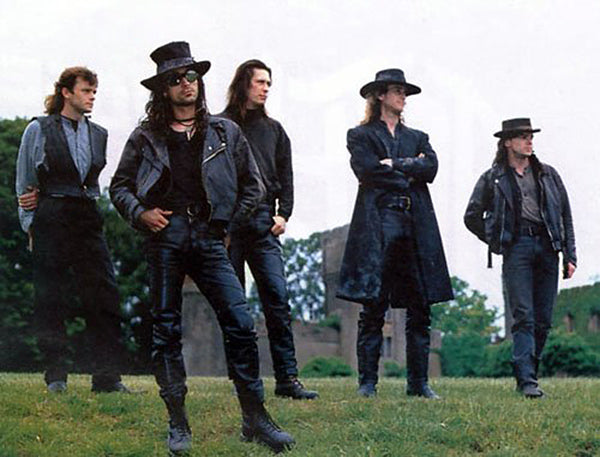
Western Goths. This exclusive trend of Gothic fashion was generated by the band Fields of the Nephilim, who paired gothic rock with a spaghetti-western image straight out of Sergio Leone — wide-brimmed hats, long duster coats, and cowboy boots, famously dusted with flour to mimic desert dust. Followers of the style wear cowboy-style leather pants with fringe and lacing, as well as leather jackets and vests. Common accessories are whips and revolvers.
One of the more curious substyles is the tribal Goth, whose aesthetics sit close to the modern primitives. The highlight of this style is abundant piercings (nose rings, pierced lips, nipples), scars, or brands. Tribal Goths wear various clothes, but you will often catch them rocking net sweaters or fetish outfits — sometimes they look like a kind of shaman. Jewelry-wise, they prefer heavy metal or silver bone chains, necklaces, and bracelets.

Glittergoths (faerie Goths) are a kitsch mix of different styles and colors. Initially, the term referred to girls who incorporated fairy attributes into their clothes, but now it more often implies a glam style. Girl Goths wear tops, skirts, and dresses (normally mini) in various colors — pink, light green, and so on — although black clothing combined with ablaze tights is also common. You can often see glittergoths rocking tutu skirts, and some finish the look with long, brightly colored wigs. The overall hairstyle emulates that of Bettie Page, the 1950s pin-up famous for her short black bangs. This style is not popular among men.

Not so long ago, the J-Gothic style burst into world gothic fashion. The letter J implies Japan. J-Goths strive to look like anime characters but with strict observance of the Gothic rules — dark clothes and contrasting makeup.
Gothic Lolita is another trend that originated in Japan. This style exploits the image of a gloomy girl dressed in gothic-style knee-length dresses adorned with frills, laces, crinolines, or pantaloons. Lolita Goths do not want to look vulgar. On the contrary, they look elegant and at ease. In their clothes, black is actively diluted with blue, purple, and red details, and Lolita Goths are no strangers to white clothes and accessories. Widespread accessories are decorative umbrellas, hats, and platform shoes with rounded noses.

The so-called Military style has been conquering more and more Gothic fashionistas — and it is one of the most controversial trends. First, it does not appeal to mysticism and the transcendental the way the majority of substyles do. Second, it cultivates the aesthetics of power and authority, which does not exactly blend with an individualistic and tolerant gothic philosophy. Military Goths sport knee-high military boots, peg-top trousers wide at the hips and narrow at the calves, tunics or jackets resembling a military uniform, and military caps. They are also drawn to protective masks and gas masks, much loved by cyber Goths and steampunk enthusiasts. For many people, this style is shocking, largely because the aesthetics of Nazi Germany are sometimes used in clothes and accessories — swastika ornaments, Iron crosses, or the Imperial Eagle (Reichsadler). The Iron Cross itself carries a far older, more complicated story — we traced it from Prussian medal to biker symbol if you want the real history.

Goths working in offices with a dress code have no chance to wear Gothic-themed clothing in all its glory. Hence the so-called Corporate Goth trend. This style reduces the amount of makeup and accessories. Instead of startling gothic outfits, corporate Goths wear strict midi black dresses and black pencil skirts along with white lace shirts, whereas men dress in business suits of dark shades.

Androgynous Goths are not a specific style, rather a general aesthetic of certain individuals. Androgyny implies sexlessness but not asexuality. Androgynous Goths look the way that makes it hard to tell which gender they represent. Males often wear skirts and outfits with fetish aesthetics. In general, the dominating pieces are skirts (both long and short), mesh tops, and various latex and vinyl items.
In general, the gothic image is unique and original. It is chosen by flamboyant personalities who enjoy challenging prim society. Not every person is courageous enough to pull off Gothic fashion. If you like this style but are not ready to dive all the way in, start with a small accent in your regular wardrobe — a Gothic ring, necklace, or earrings.
Frequently Asked Questions
Is gothic fashion only about wearing black?
No. Black dominates, but gothic fashion regularly uses deep jewel tones — burgundy, dark purple, forest green, midnight blue — and even white for Victorian and antique goth substyles. What makes an outfit gothic is the silhouette, materials (velvet, lace, leather), and mood, not the color alone.
How many types of gothic fashion substyles exist?
At least 15 recognized substyles: Traditional, Antique, Victorian, Gypsy, Vampire, Cyber, Steampunk, Fetish, Western, Tribal, Glitter (Faerie), J-Gothic, Gothic Lolita, Military, and Corporate. Each has its own rules for clothing, accessories, and makeup. Most share dark aesthetics and a preference for silver-toned metals in jewelry.
What kind of jewelry do goths typically wear?
Goths favor heavy white metals — sterling silver, white gold, or platinum — while yellow gold is traditionally avoided. Common motifs include Celtic crosses, skulls, dragons, bats, and roses. Stones tend to be cool-colored or dark: black opal, onyx, agate, garnet, and pearls. Chokers, statement rings, and layered chain necklaces are the most worn pieces.
Can you wear gothic fashion in a professional work environment?
Yes — that is exactly what Corporate Goth is designed for. It tones down heavy makeup and extreme accessories while keeping the dark color palette. Think black pencil skirts, dark blazers, and subtle silver jewelry like a gothic ring or understated pendant. The style stays within most office dress codes while still signaling membership in the subculture.