

Key Takeaway
A wallet chain clips your billfold to your belt loop so it can't fall out, get stolen, or disappear mid-ride. Sterling silver for weight and character, brass for vintage warmth, leather for a quieter look. Most people need a 20–22 inch chain — measure from your belt loop to mid-pocket and add two inches of drape.
A wallet chain does exactly what it sounds like — it tethers your wallet to your belt loop so it stays put. Bikers figured this out in the 1950s. Punks made it louder in the '70s. Grunge wore it in the '90s. And right now, in 2026, the wallet chain is back in mainstream rotation.
Y2K revival, workwear brands, Chrome Hearts hype — they're all pushing this accessory back into wardrobes. But most articles about the comeback just say "it's trendy again." They don't help you actually pick one. Not every chain wallet fits every body type, wardrobe, or budget. Material, length, clasp style — these things matter more than you'd think.

Where Wallet Chains Come From
Securing valuables to your body isn't a modern idea. Victorian gentlemen clipped pocket watches to waistcoat chains. American cowboys lashed coin pouches to their belts. Same principle, different centuries.
The wallet chain as we know it came from American motorcycle culture in the 1950s. At highway speed, a wallet in your back pocket vibrates out without warning. Riders solved this with a metal chain from belt loop to billfold grommet — a small metal ring punched into the wallet's corner. Functional first, fashion second. That practical origin is why biker wallets still come with grommets built in today.
Punk changed the game in the late '70s. London and New York punks adopted the biker wallet chain and made it heavier, longer, noisier. The jingle against denim was deliberate. Grunge inherited it in the '90s. Emo carried it through the early 2000s. Then it faded from mainstream fashion — though it never left biker culture — until the Y2K and workwear revivals of 2024–2026 pulled it back.
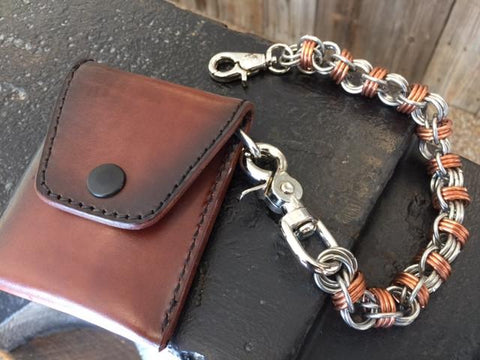
How to Attach and Wear a Wallet Chain
Three parts: a chain with two spring hooks, a wallet with a grommet, and a belt loop. That's all you need.
Hook one end to your wallet
Open the spring hook and clip it through the grommet — the small metal ring on the corner of your wallet. Most leather biker wallets have one. If yours doesn't, some chains come with a lobster clasp that works with a D-ring or keychain loop.
Wallet goes in your back pocket
Same side as your dominant hand. Right-handed? Right back pocket. This gives you a natural reach when you need it. The chain should exit from the grommet side of the pocket, facing outward.
Clip the other end to a belt loop
Use the belt loop closest to your front pocket on the same side. This gives the chain a clean drape along your thigh — visible but not swinging wildly. If your jeans don't have a loop in the right spot, clip it to the front belt loop instead.
Pro tip: Chain length matters more than people realize. Too long and it catches on chair legs, car doors, turnstiles. Too short and it pulls when you sit. Most wallet chains run 18–24 inches. If you're under 5'9", a 20-inch chain tends to sit right. Over 6 feet, go 22–24 inches. Measure from your belt loop to the middle of your back pocket — that's roughly the length you need, plus two inches for drape.
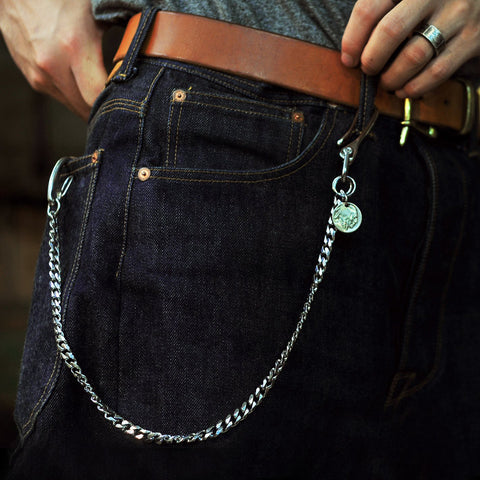
Silver, Brass, Leather, or Steel — Picking the Right Material
The material defines the feel, sound, and aging character of a wallet chain. Here's how the four main options compare:
| Feature | Sterling Silver | Brass | Leather | Stainless Steel |
|---|---|---|---|---|
| Weight | Heavy (100–250g) | Medium-heavy | Light | Medium |
| Aging / Patina | Darkens with character | Warm golden patina | Softens and creases | Stays the same |
| Maintenance | Occasional polish | Wipe down monthly | Condition yearly | Almost none |
| Sound | Deep, weighty jingle | Warm, muted clink | Silent | Bright, tinny jingle |
| Best for | Statement piece, daily carry | Vintage aesthetic | Workwear, Americana | Budget-friendly daily use |
Sterling silver is the premium pick. A solid .925 chain can weigh well over 100 grams, and you feel that weight against your leg all day — it's substantial in a way steel can't match. Silver develops a natural patina over months of wear. Some people polish it off. Others let it darken. Either way, the metal tells a story over time. Our silver wallet chain collection runs from clean curb-link designs to hand-sculpted skull and dragon chains.
Brass has a warmth that silver and steel don't. It starts bright, then deepens to a golden-brown over months of handling. If you like the look of aged metal — think old trumpet valves or vintage hardware — brass wallet chains deliver that without the silver price tag. The Gothic Skull brass chain at 23 inches is a good example — heavy, detailed clasps, and a finish that only gets better with use.
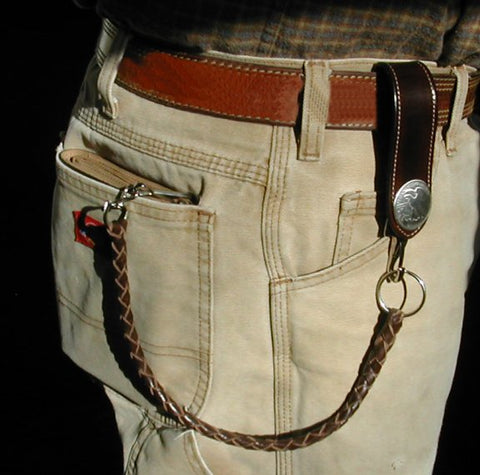
Leather wallet chains are a completely different animal. No jingle. No metal cold against your leg in winter. Just a braided cowhide lanyard that softens and develops character the more you use it. They pair naturally with workwear — selvedge denim, chore coats, leather boots. If the metal-on-denim sound isn't your thing, leather is the quiet alternative.
Stainless steel is the practical choice. It doesn't tarnish, doesn't scratch easily, and costs less than everything above. Most mass-market wallet chains are steel. They work fine — but they don't have the heft of silver or the aging character of brass. If you're trying a wallet chain for the first time and aren't sure you'll stick with it, steel is a low-risk starting point.

Chain Wallet Styles for Every Look
Not all wallet chains serve the same outfit. The key is matching the chain's weight and design to the rest of what you're wearing.
Biker and Classic
Heavy silver or brass with sculpted clasps — skulls, dragons, tribal motifs. Pair it with a leather vest, boots, and a thick bifold wallet. This is where wallet chains started, and the aesthetic hasn't changed because it doesn't need to. A sterling silver skull chain with detailed skeleton links makes a statement without trying too hard.
Streetwear and Y2K
Medium-weight chains in silver or steel. Chrome Hearts-inspired — or the real thing if your budget allows. Worn with loose-fit jeans, oversized tees, and chunky sneakers. Keep it at 20–22 inches so the chain hangs visible against the outer thigh. The look works best when the chain is the loudest piece in an otherwise relaxed fit.
Workwear and Minimal
Leather wallet chains or thin, clean metal links. No skulls, no ornament — just function and texture. Pairs with selvedge denim, flannel, chore coats, and Red Wing-style boots. A dark brown braided cowhide chain almost disappears into the outfit until someone notices the clasp. It's the wallet chain for people who don't want to look like they're wearing a wallet chain.
Jean Chain vs Wallet Chain — What's the Difference?
Close, but not quite the same thing. A wallet chain has two clips — one for the wallet grommet, one for the belt loop. A jean chain hooks from one belt loop to another or from a loop to a pocket, with no wallet attached. It's purely decorative.
In practice, the terms overlap constantly. If there's a wallet on the end, it's a wallet chain. If it's just hanging from your jeans for the look, that's a jean chain — sometimes called a pants chain. Some people use a wallet chain without actually attaching a wallet, making it both. We covered the origins of jean chains in punk and music subcultures in a separate post if you want the full history.

Frequently Asked Questions
What length wallet chain should I get?
Most people land between 20 and 22 inches. If you're under 5'9", lean toward 18–20 inches. Over 6 feet, 22–24 works better. The simplest way to check: measure from your belt loop to the center of your back pocket, then add about two inches for natural drape.
Can you wear a wallet chain without a wallet?
Yes. Clip one end to a belt loop and the other to a front pocket or another loop. At that point it's functioning as a jean chain — decorative rather than functional. Plenty of people wear them this way.
Do wallet chains damage jeans?
Metal chains will wear the denim over time. You'll notice fading along the chain line after a few months of daily wear, especially with heavier silver or brass. Some people consider that wear pattern part of the character. If it bothers you, leather chains are the denim-friendly option.
Are wallet chains allowed everywhere?
Most places, yes. Some concert venues and stadiums consider long metal chains a potential weapon and won't allow them past security. Schools sometimes prohibit them too. For everyday use — commuting, bars, restaurants, offices with a casual dress code — you won't have issues.
What's the best wallet chain material for daily wear?
Sterling silver if you want something that ages well and feels substantial. Stainless steel if you want zero maintenance. Leather if you prefer quiet and low-profile. There's no single best — it depends on what matters to you.
A wallet chain is one of the few men's accessories that's genuinely functional and genuinely expressive at the same time. Pick the material that matches your wardrobe, the length that fits your frame, and a design you won't get tired of — and it becomes part of your daily carry without a second thought. Browse the full wallet chain collection to see what's available.